

Description
Rainbow Eucalyptus Tree Seeds
Eucalyptus deglupta
"Seeds are Very Tiny, Handle with Care"
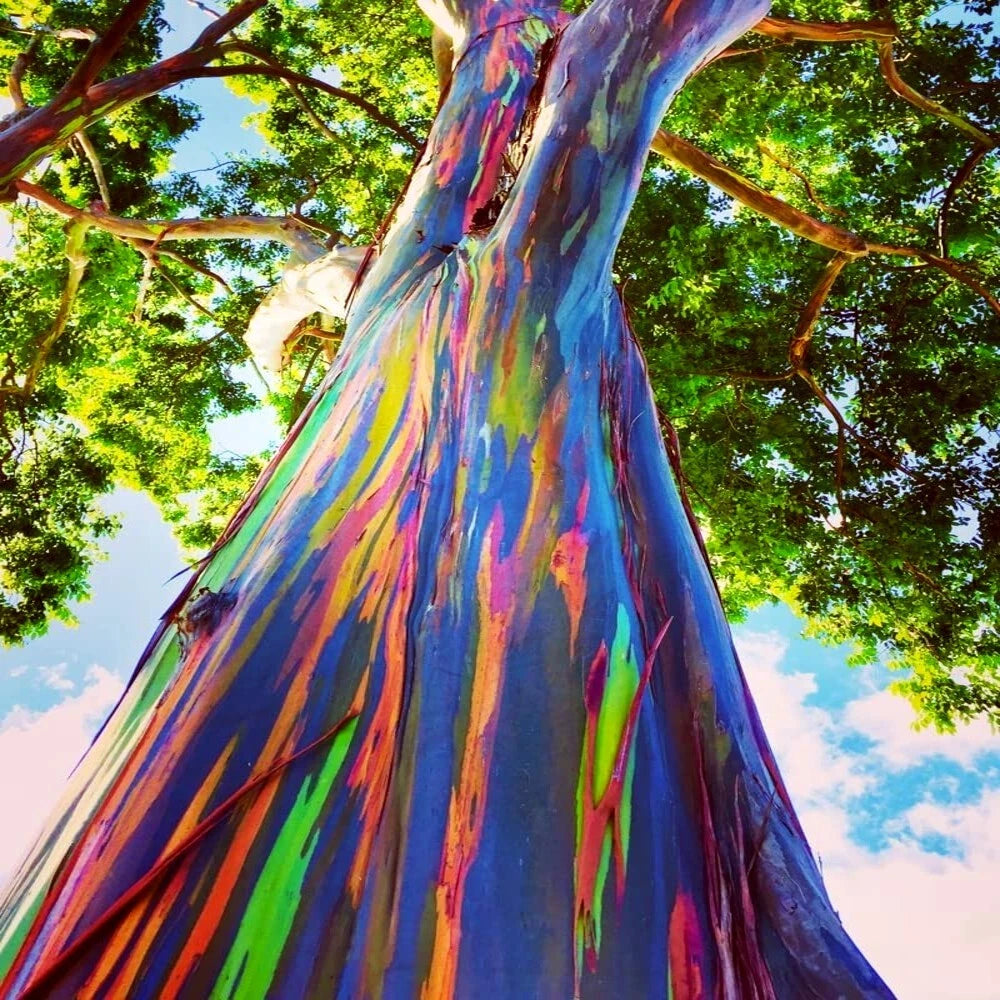
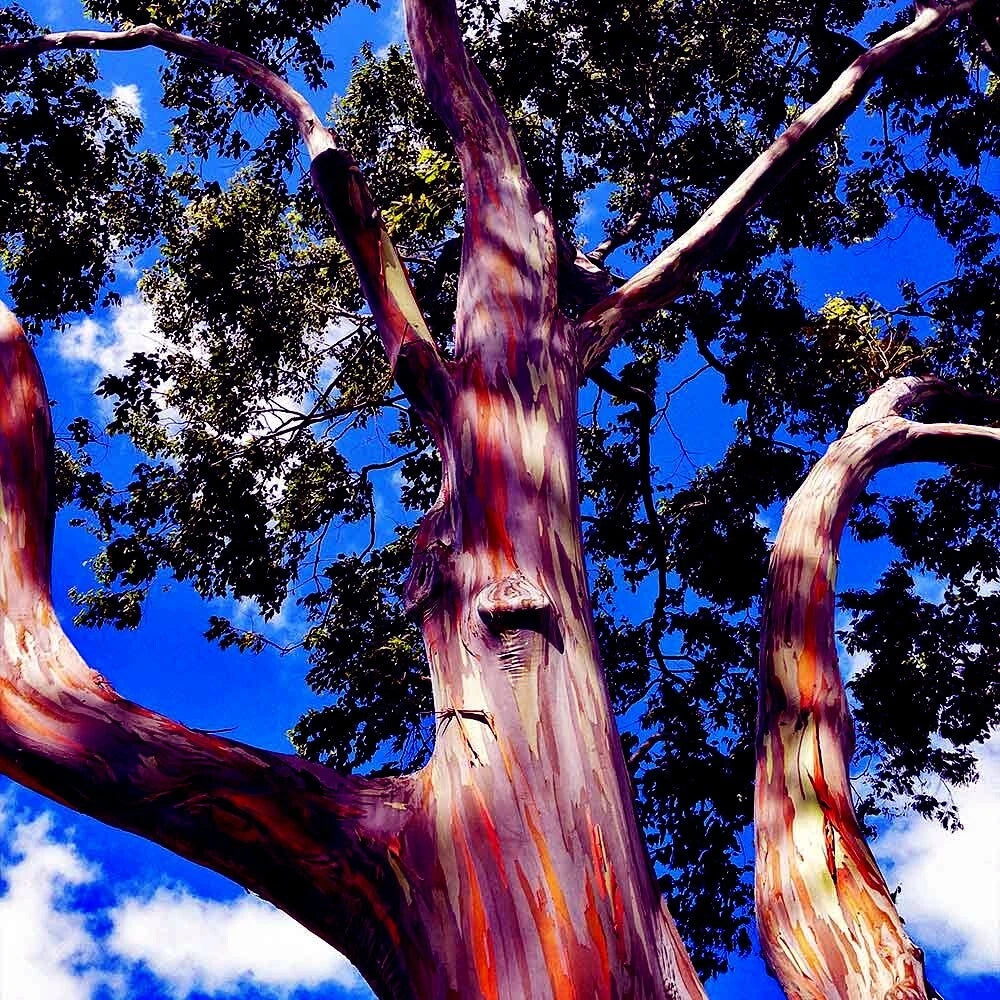
The Rainbow Eucalyptus, as its name suggests, displays a bark adorned with brilliant, multicolored hues that evoke awe and amazement. Its trunk appears like a living painting, with seven-hued rainbow colors splashed across the bark, creating a truly unique visual spectacle.
Native to the Philippines, New Guinea, and Indonesia, this is the only eucalyptus species indigenous to the Northern Hemisphere. It thrives in tropical forests with high rainfall and has also been successfully cultivated in Hawaii, Southern Florida, and Southern California.
🌿 Key Features:
-
Botanical Name: Eucalyptus deglupta
-
Common Name: Rainbow Eucalyptus, Mindanao Gum
-
Growth Habit: Fast-growing tropical tree
-
Height: Up to 250 feet
-
Sun: Full sun required for optimum growth
-
Soil: Deep, sandy-loamy, fertile, moist, well-drained; prefers neutral to slightly acidic pH
-
Water: Regular watering during first year; drought-tolerant once established
-
Climate: Tropical; frost-sensitive; thrives in high humidity and warm temperatures (70–85°F)
-
Hardiness: USDA Zones 10–12
-
Special Notes: Soil moisture and climate affect bark coloration; avoid waterlogged conditions
Why Grow Rainbow Eucalyptus?
-
One of the fastest-growing trees in the world
-
Stunning rainbow-colored bark adds dramatic beauty to any landscape
-
Ideal for tropical gardens, large properties, or collectors of rare trees
-
Rare and highly sought-after tropical species
Bring the tropical splendor and vibrant bark coloration of the Rainbow Eucalyptus to your garden with these tiny, precious seeds, perfect for enthusiasts and collectors alike.
Rainbow Eucalyptus Germination:
"Seeds are Very Tiny, Handle with Care"
1) Cold stratify for by placing seeds in a wet paper towel. Put inside of a zip lock bag and place in the fridge for 2 weeks. This will help to increase germination rates.
2) Use a mix of 50% sand, & 50% peat moss.
3) Place seeds on top of mixed soil, and do not bury as they need light in order to germinate. Use a spray bottle to mist and keep them slightly moist, but not overly wet.
4) Use a heated propagator mat to keep them at appx. 75 degrees F.
5) Keep in a lightly shaded area for the first 3 days. Then place in the full sun for only 1 hour each day for 1 week. Gradually increase the full sun until they are receiving 50% full sun each day, but never full sun all day.
6) Keep moist with a spray bottle.
7) Germination is erratic, and will take anywhere from 14-90 days. Don't toss out any that do not sprout early as they are still good and will sprout at a later time.
Germinación del eucalipto arcoíris:
"Las semillas son muy pequeñas, manipúlelas con cuidado"
1) Estratifique en frío colocando las semillas en una toalla de papel húmeda. Colóquelas dentro de una bolsa con cierre hermético y guárdelas en el refrigerador durante 2 semanas. Esto ayudará a aumentar las tasas de germinación.
2) Use una mezcla de 50 % arena y 50 % turba.
3) Coloque las semillas sobre tierra mezclada y no las entierre, ya que necesitan luz para germinar. Use una botella rociadora para rociarlas y mantenerlas ligeramente húmedas, pero no demasiado mojadas.
4) Use una estera de propagación calentada para mantenerlas a aproximadamente 75 grados F.
5) Manténgalas en un área ligeramente sombreada durante los primeros 3 días. Luego, colóquelas a pleno sol durante solo 1 hora cada día durante 1 semana. Aumente gradualmente la exposición al sol hasta que reciban el 50 % de pleno sol cada día, pero nunca pleno sol todo el día.
6) Manténgalas húmedas con una botella rociadora.
7) La germinación es irregular y puede tardar entre 14 y 90 días. No deseches las que no broten pronto, ya que todavía están en buen estado y lo harán más adelante.