



Description
Traveler’s Palm Tree Seeds (Ravenala madagascariensis) – Exotic Bird of Paradise Plant
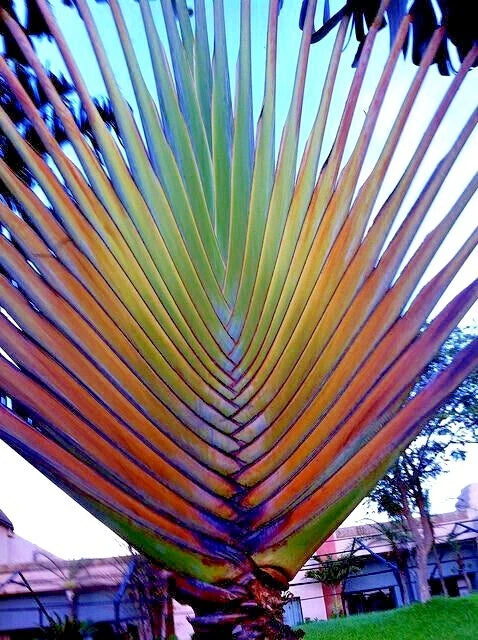
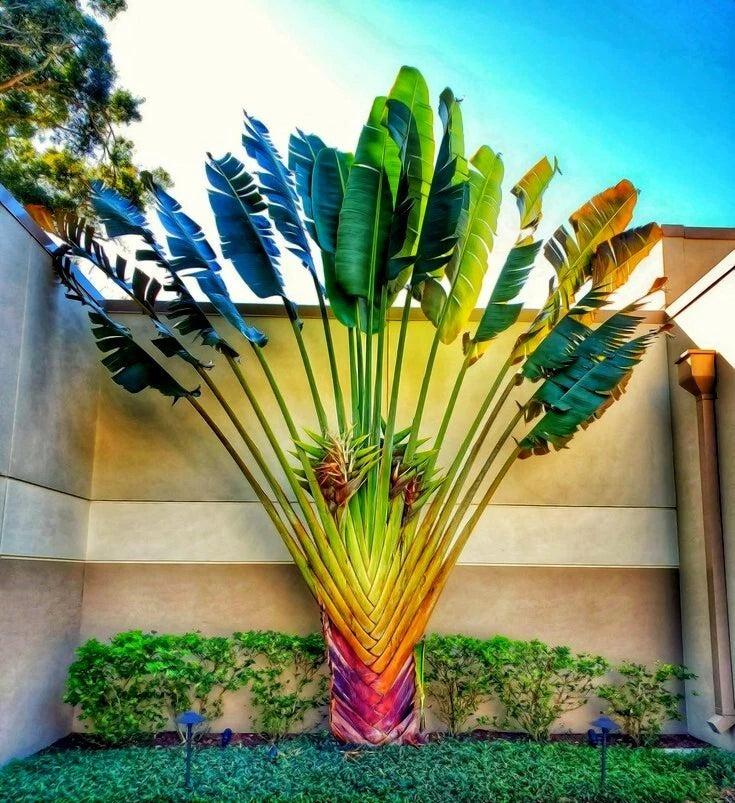
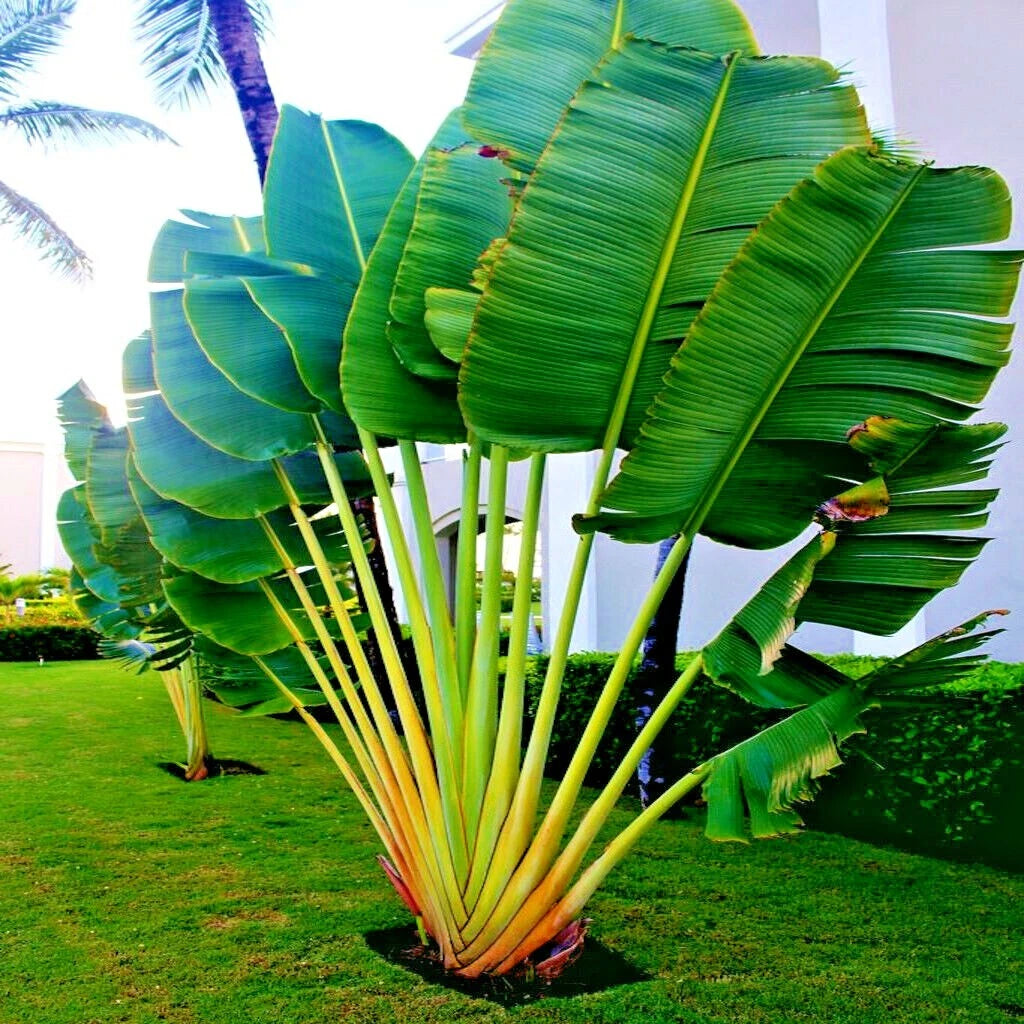
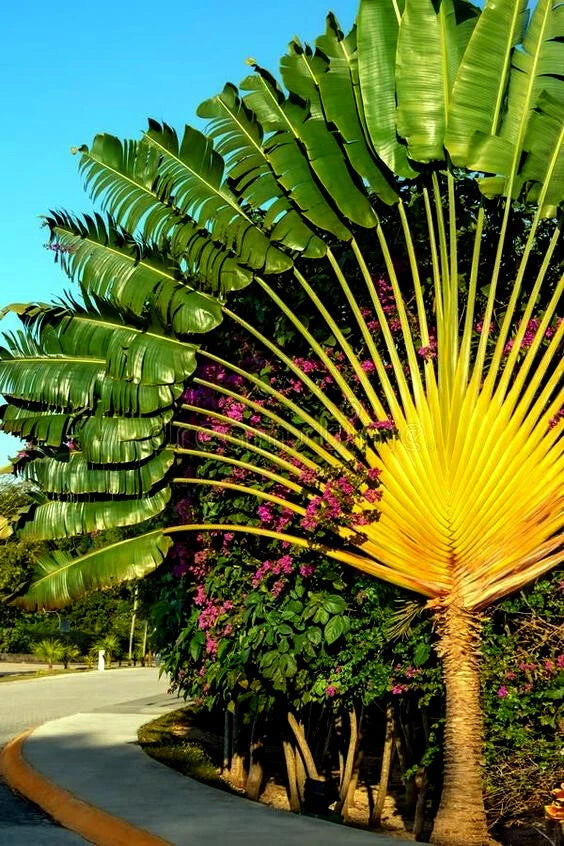
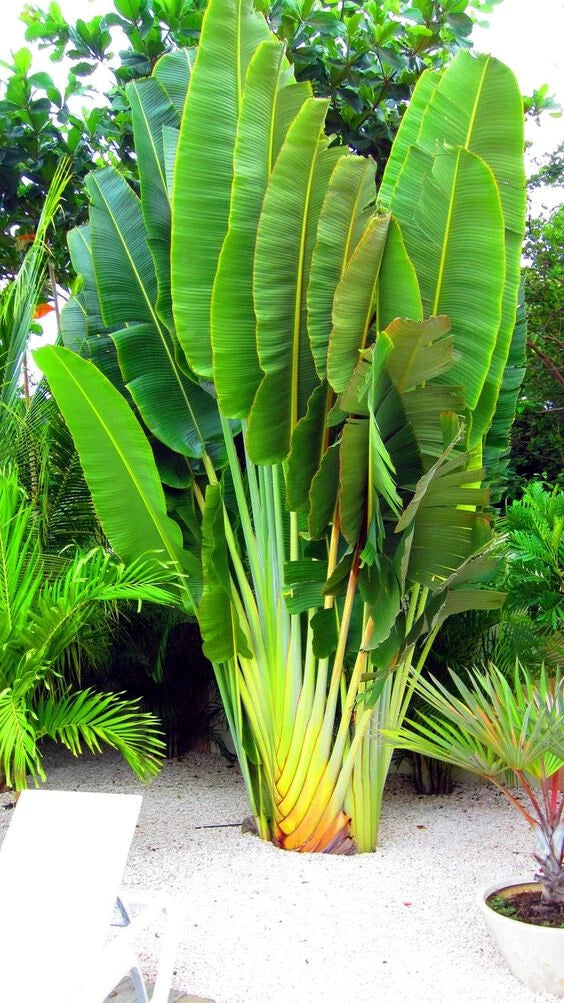
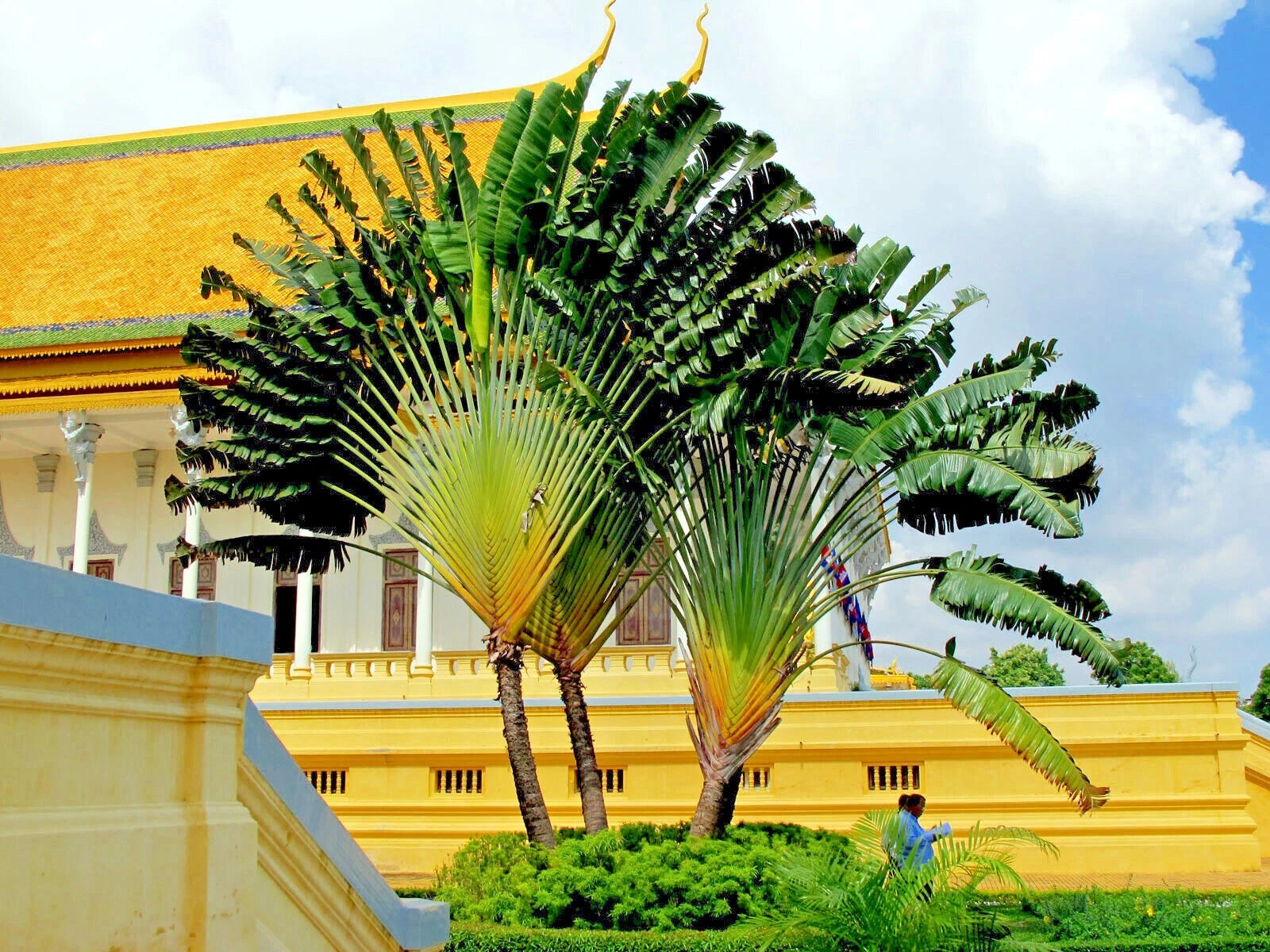
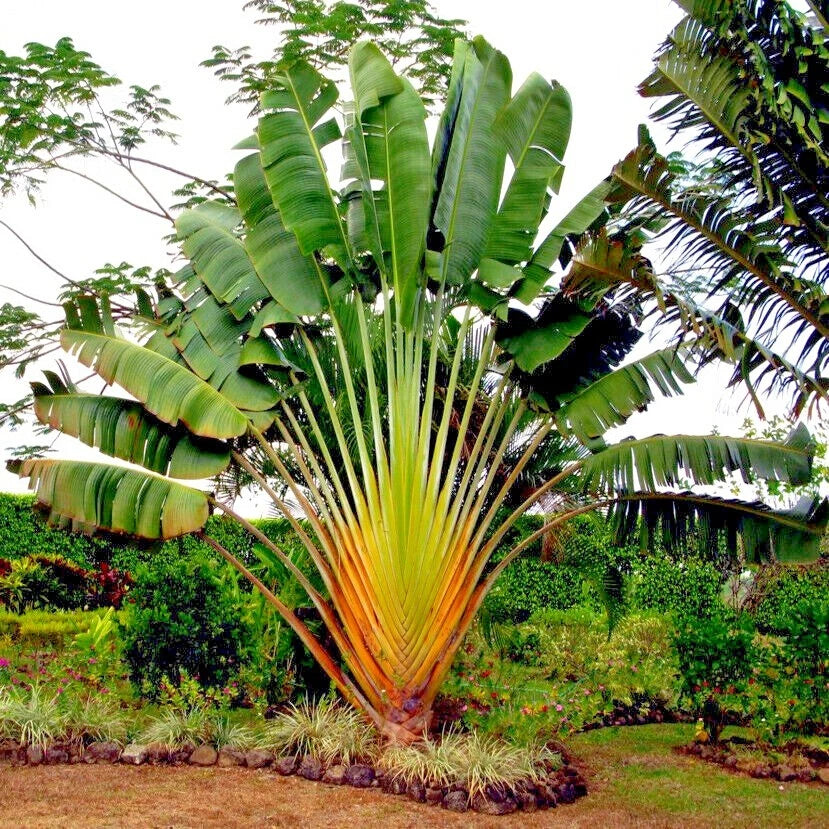
Bring the tropics to your garden with the striking Traveler’s Palm (Ravenala madagascariensis), a fan-shaped evergreen that’s part of the Bird of Paradise family, not a true palm. Native to Madagascar, this dramatic tropical plant is famous for its paddle-shaped, banana-like leaves that grow east to west, acting as a natural compass—hence the name Traveler’s Palm.
🟢 Key Features:
-
Exotic Fan-Shaped Leaves: Leaves reach up to 14 feet long, arranged in a 45-degree fan pattern for a stunning visual display.
-
Fast-Growing Tropical Tree: Can reach 25–35 feet tall and 20 feet wide outdoors in tropical climates.
-
Multi-Trunk Growth: Produces multiple stems if suckers are not trimmed, adding architectural interest to any landscape.
-
White Bird of Paradise-Style Flowers: While grown mainly for its foliage, it produces striking white flowers similar to the Giant Bird of Paradise.
-
Versatile Growing Options: Ideal for outdoor planting in USDA Zones 10–11; can also thrive in large containers indoors to limit its size.
-
Drought-Tolerant: The trunk stores water, allowing it to survive dry spells in tropical regions.
-
Tropical Landscaping Statement: Perfect for creating a lush, exotic garden or as a standout container plant indoors.
🌿 Growing Tips:
-
Prefers full sun with well-draining soil.
-
Protect young plants from frost in cooler zones (Zone 9).
-
Trim suckers to maintain a single-trunk appearance if desired.
-
Container growing helps manage size while keeping the plant healthy.
Add this rare Traveler’s Palm to your garden and enjoy a touch of tropical elegance with its dramatic fan-shaped foliage and bold architectural presence. Perfect for landscaping enthusiasts, collectors, and tropical plant lovers.
Traveler's Palm Germination:
1) Scarify the seeds by rubbing the shell with medium grit sandpaper.
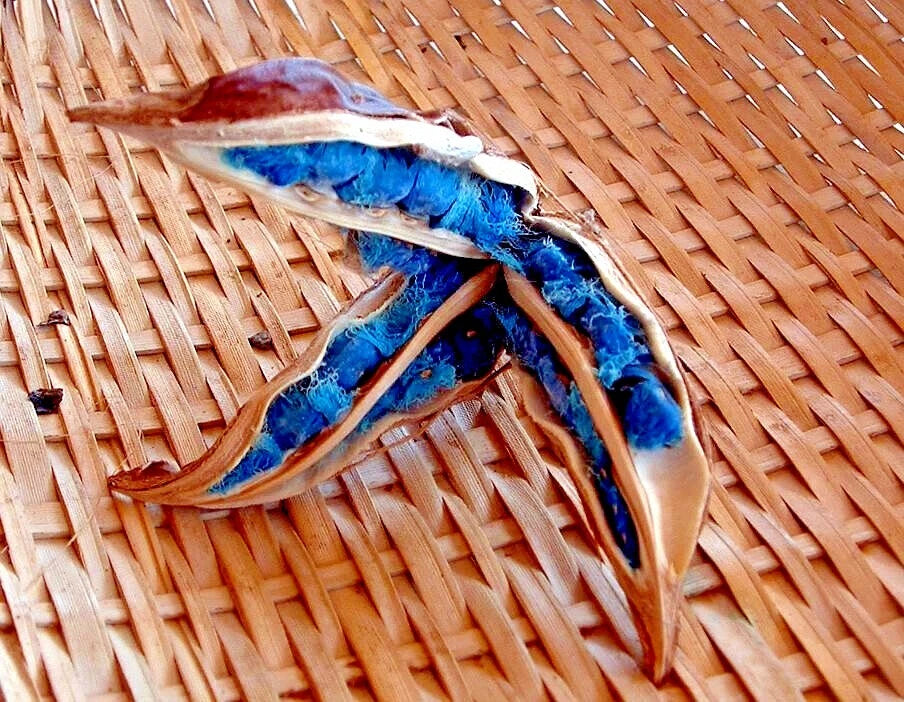
2) Soak the seeds in warm water for 2-3 days. Use a thermos to keep the water between 80-86 degrees F, and be sure to change the water every 12-14 hours. Then you must remove any loose blue skin around the seed.
3) Use a Heated Propagator & place the seeds 1/2" deep in moist peat moss & seed starting mix. Maintain a temperature of 80 degrees F. and keep under a bright grow light.
4) Cover with plastic to make sure the humidity is high & the soil stays moist. (Not wet) Cut a few small holes in the plastic so it can still breath. Also periodically check seeds for mold or fungus. If any is found, clean the seeds with a copper based fungicide, and rinse them well. Place them back in a new and sterile potting mix.
5) Patience is need as with any tropical as germination rates are very erratic. Germination will take place within 1-3 months for most seeds. However, some can take all the way up to 6 months, so don't toss seeds that don't sprout early, as they are still good and need a bit more time.
Germinación de la palma del viajero:
1) Escarifique las semillas frotando la cáscara con papel de lija de grano medio.
2) Sumerja las semillas en agua tibia durante 2 o 3 días. Use un termo para mantener el agua a una temperatura de entre 80 y 86 grados F y asegúrese de cambiar el agua cada 12 a 14 horas. Luego, debe quitar la piel azul suelta que rodea la semilla.
3) Use un propagador calentado y coloque las semillas a 1/2" de profundidad en turba húmeda y mezcla para iniciar las semillas. Mantenga una temperatura de 80 grados F y manténgalas bajo una luz de crecimiento brillante.
4) Cubra con plástico para asegurarse de que la humedad sea alta y la tierra se mantenga húmeda. (No mojada) Corte algunos agujeros pequeños en el plástico para que aún pueda respirar. También revise periódicamente las semillas para ver si tienen moho u hongos. Si encuentra alguno, limpie las semillas con un fungicida a base de cobre y enjuáguelas bien. Vuelva a colocarlas en una mezcla para macetas nueva y esterilizada.
5) Se necesita paciencia como con cualquier planta tropical, ya que las tasas de germinación son muy erráticas. La germinación se producirá en un plazo de 1 a 3 meses para la mayoría de las semillas. Sin embargo, algunas pueden tardar hasta 6 meses, así que no deseche las semillas que no broten pronto, ya que aún están en buenas condiciones y necesitan un poco más de tiempo.